Press
Iro press kit
Iro is a colour game for phones and tablets: a colour appears, and you name it in three numbers (its hue, its saturation and its lightness).
Free on Android, with no ads, no in-app purchases and no account. Iro is planned for iOS too, and its price there hasn't been set.
ZIP, v04, 49.2 MB. The screenshots, key art and logos below, the dark-theme screenshots, 8 and 15 second cutdowns of the trailer, a how-to-play video, and the facts, FAQ and credits as text and as one PDF.
Facts
- Developer Tomaž Drnovšek, Ljubljana, Slovenia
- Platform Android phones and tablets, portrait only. Planned for iOS.
- Price Free on Android. No ads, no in-app purchases, no subscription and no in-game currency.
- Genre Puzzle. On Google Play: Game › Puzzle, tagged Puzzle and Casual.
- Language English
- Requires Android 7.0 or later
- Plays Offline. No account, no sign-in, and your progress stays on your device.
- Name The wordmark is IRO. In running text, Iro.
Links and contact
- Google Play The listing
- Website theirogame.com
- Try a round One sample round, in the browser
- Privacy The game's policy and this website's
- Press contact hello@theirogame.com
No embargo. For anything not here, write to hello@theirogame.com.
Trailer
The launch trailer: a real round, the game's moving chapter scenes, and the wordmark.
Screenshots
Phone screenshots, 1080 × 1920 PNG, from the real game and not retouched. Each links to its original file.
-
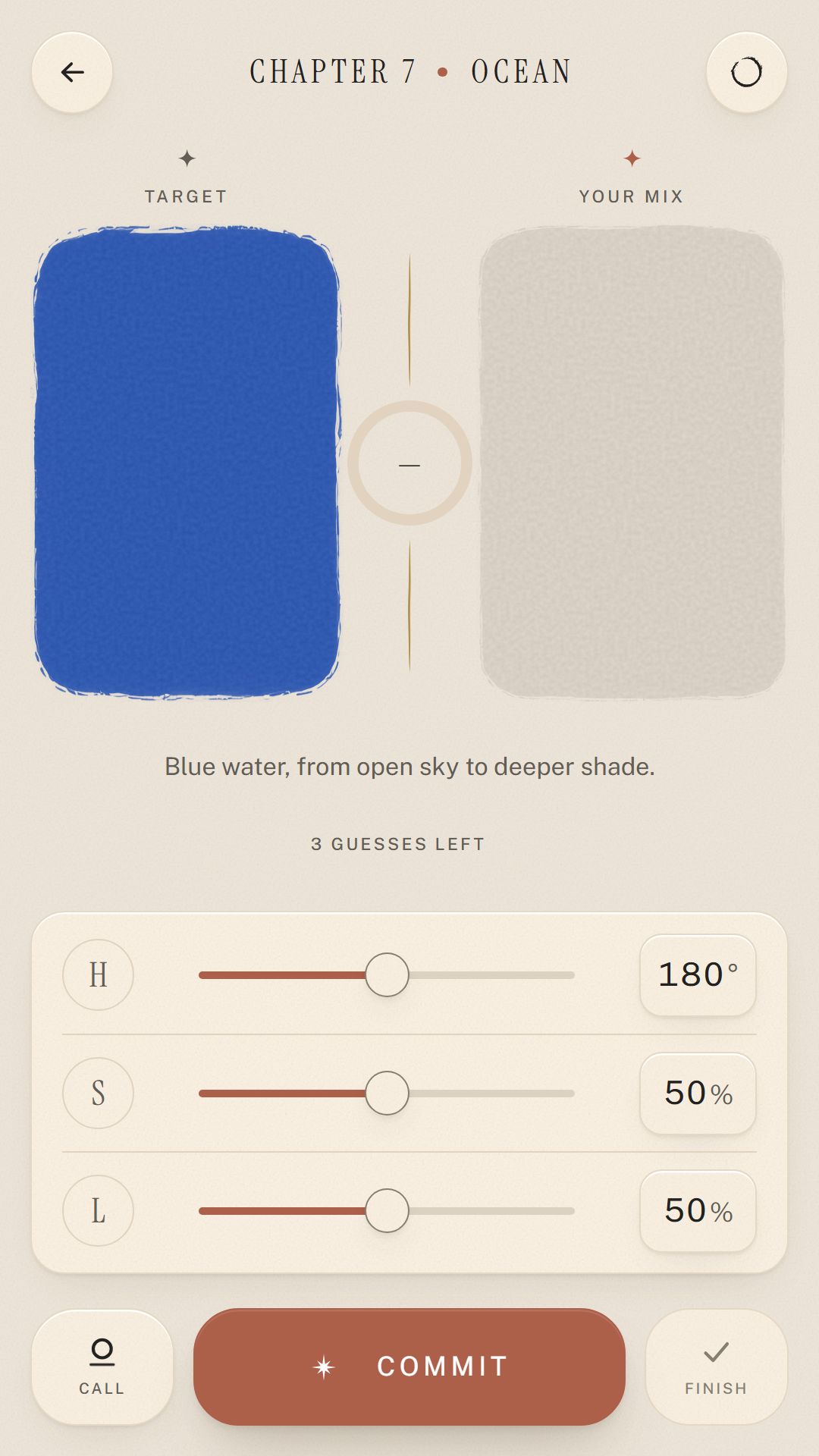
The round
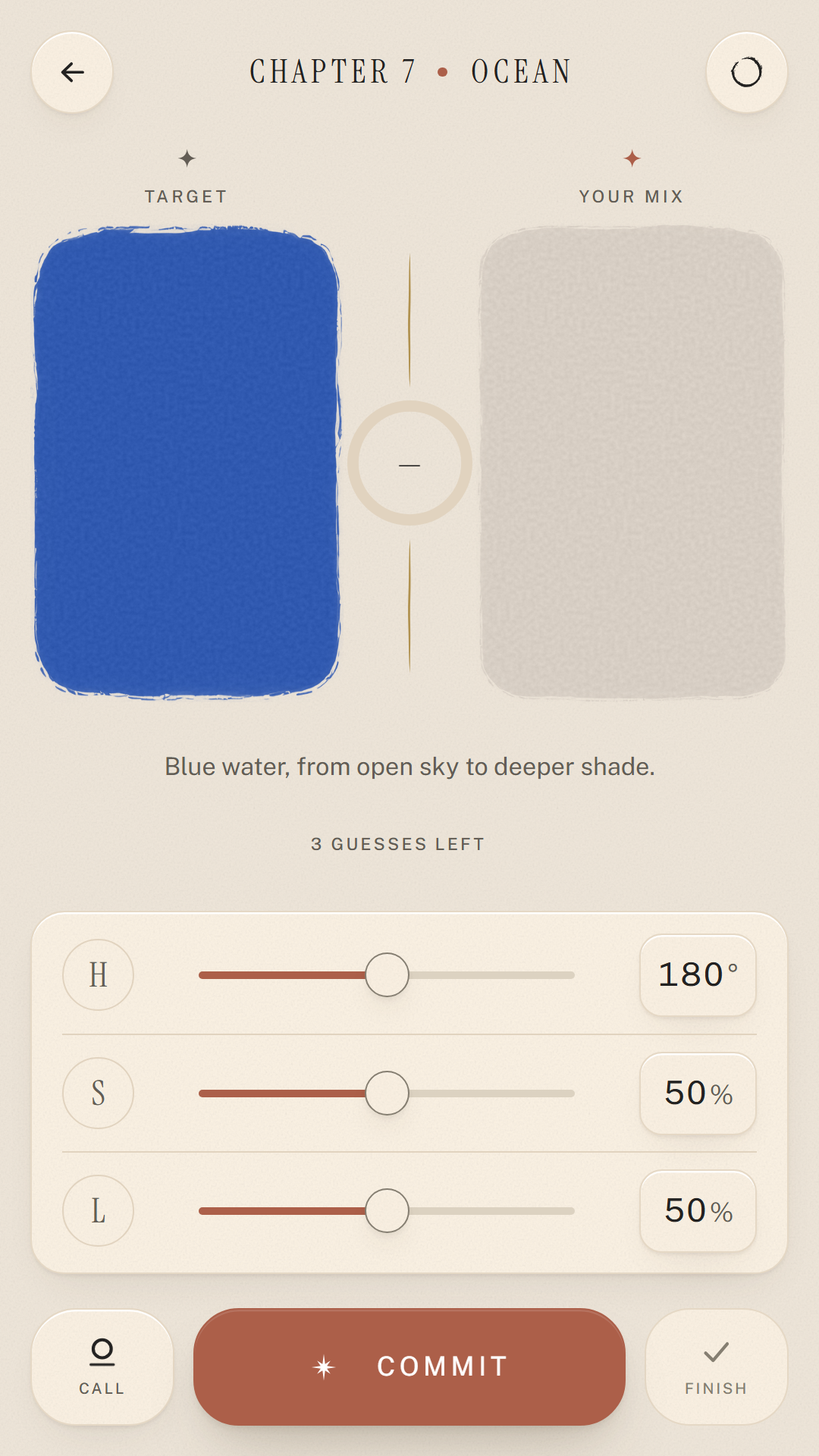
You get a colour, and three numbers to name it with: hue, saturation and lightness.
PNG, 1.2 MB
-
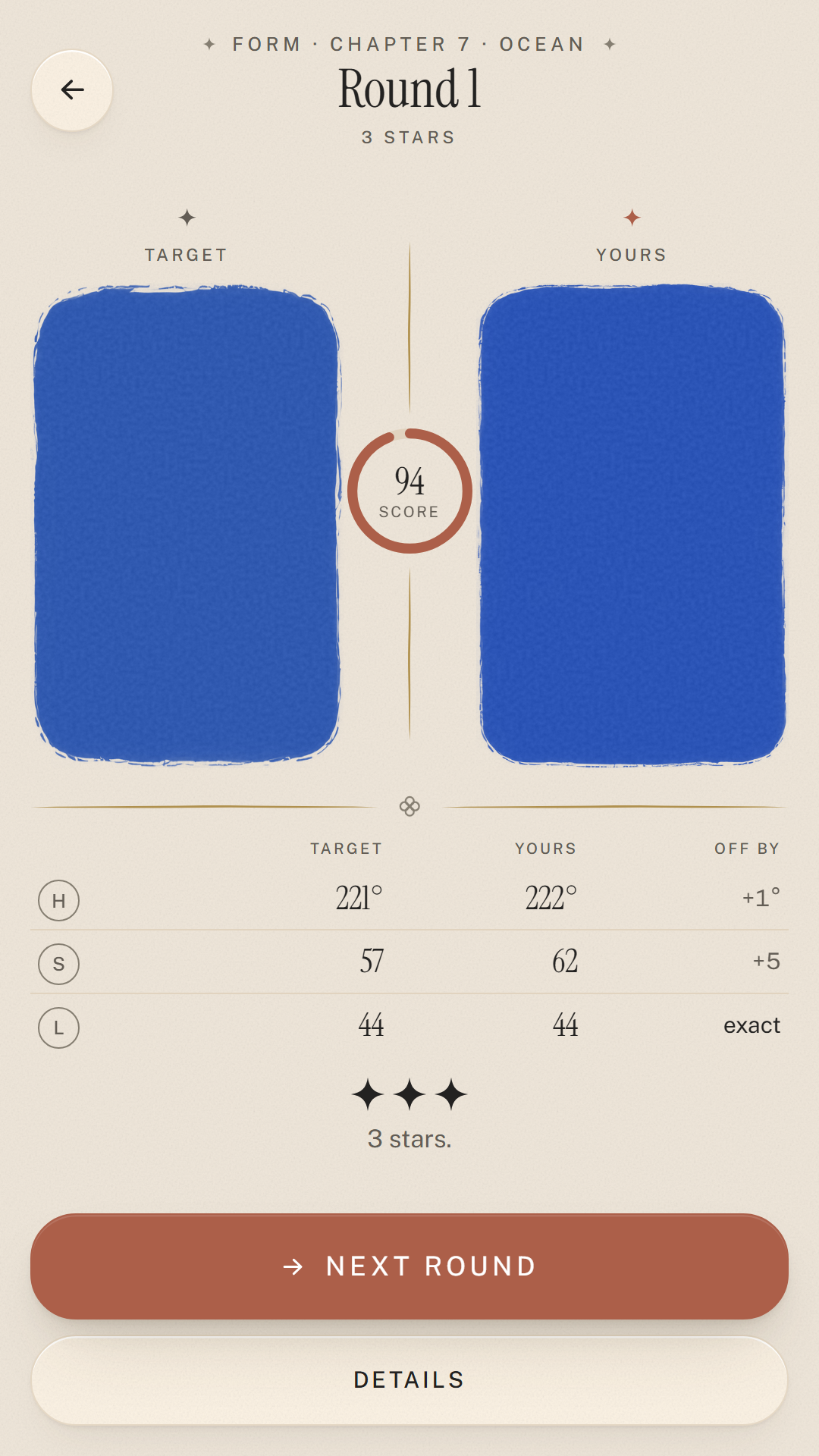
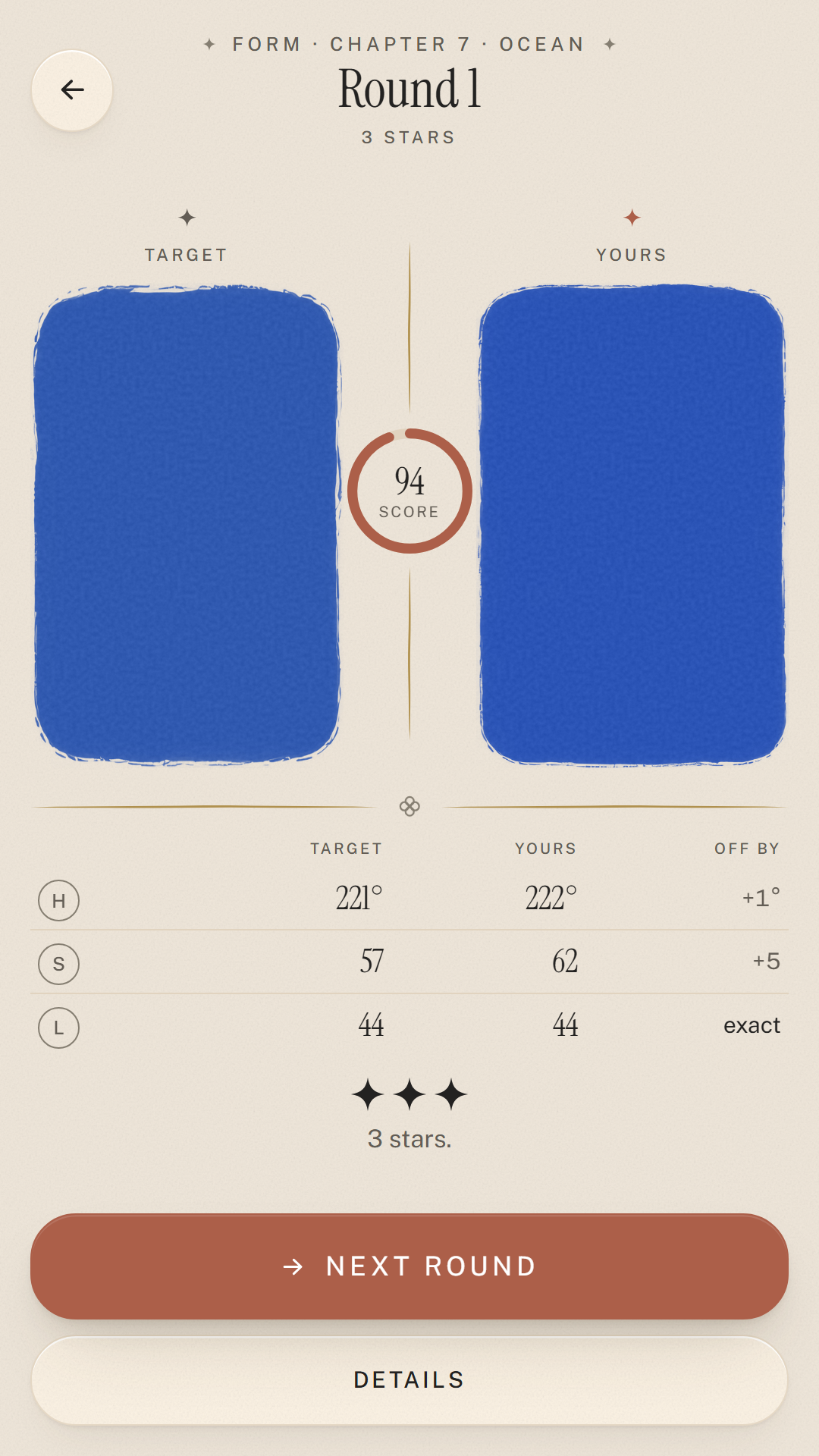
The result
Your mix sits beside the target, scored out of 100, with the miss on each number set out underneath.
PNG, 1.1 MB
-
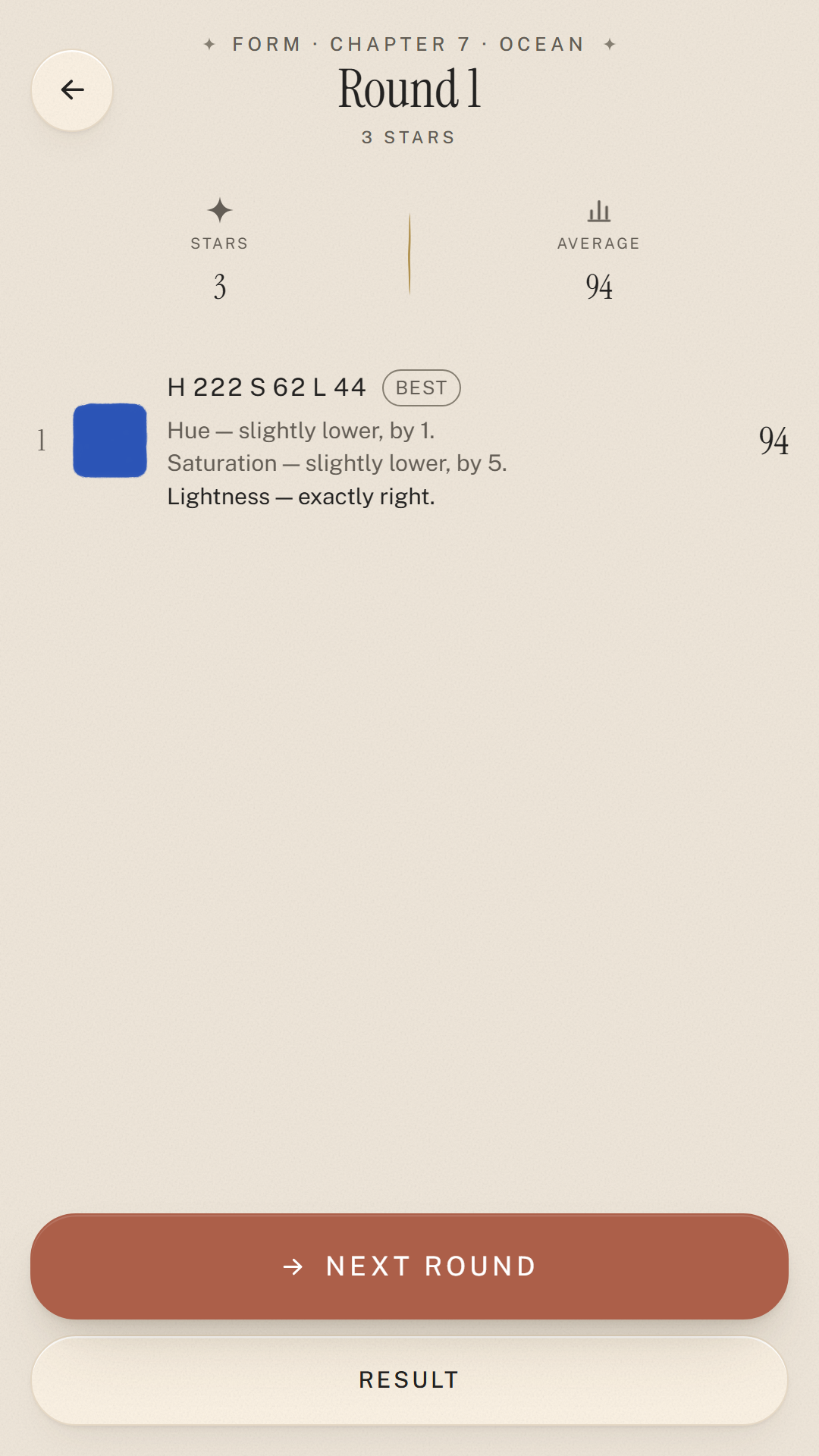
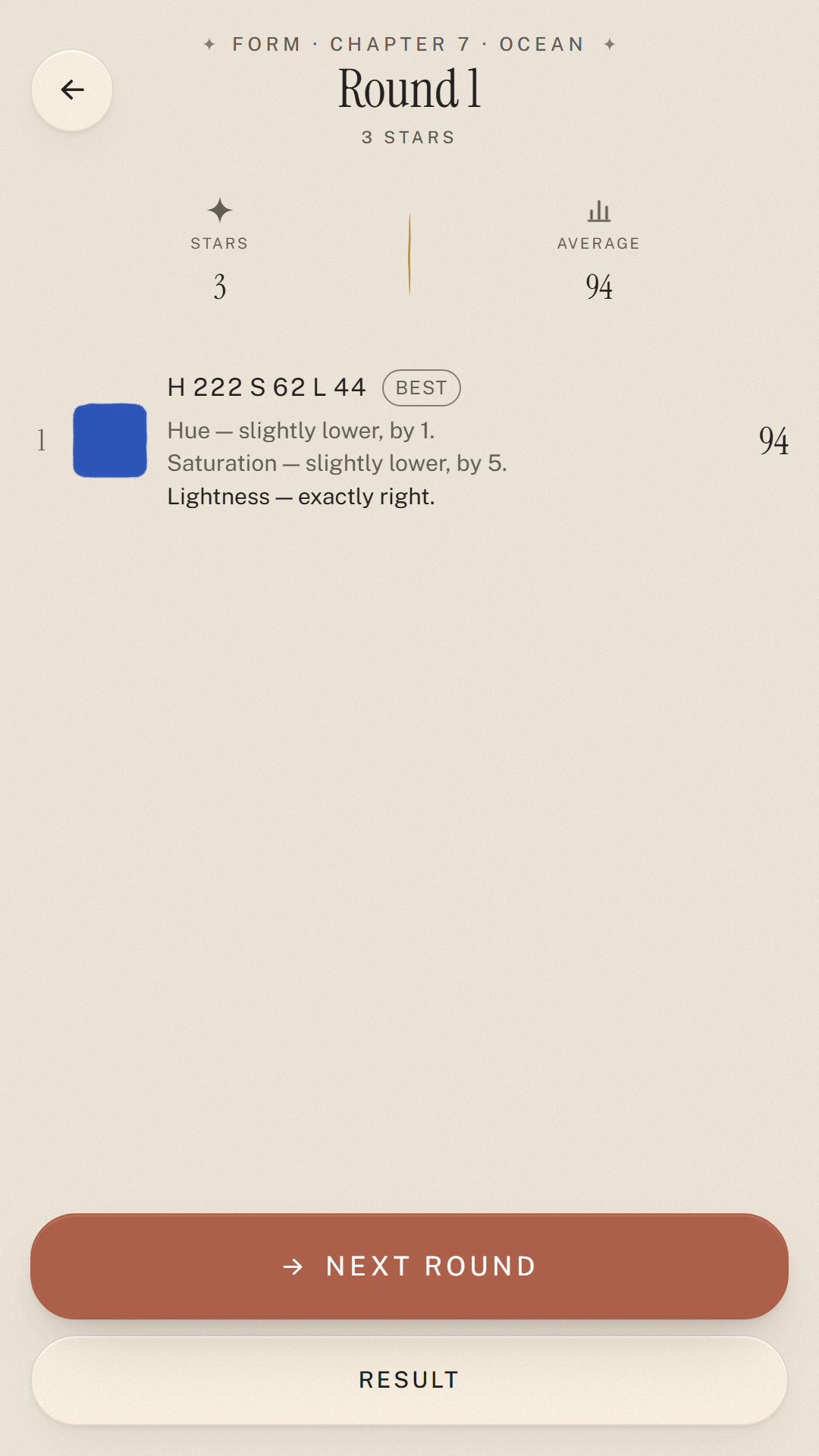
What each number was off by
Open the details and each number gets a note: which way it was off, and by how much.
PNG, 899 KB
-
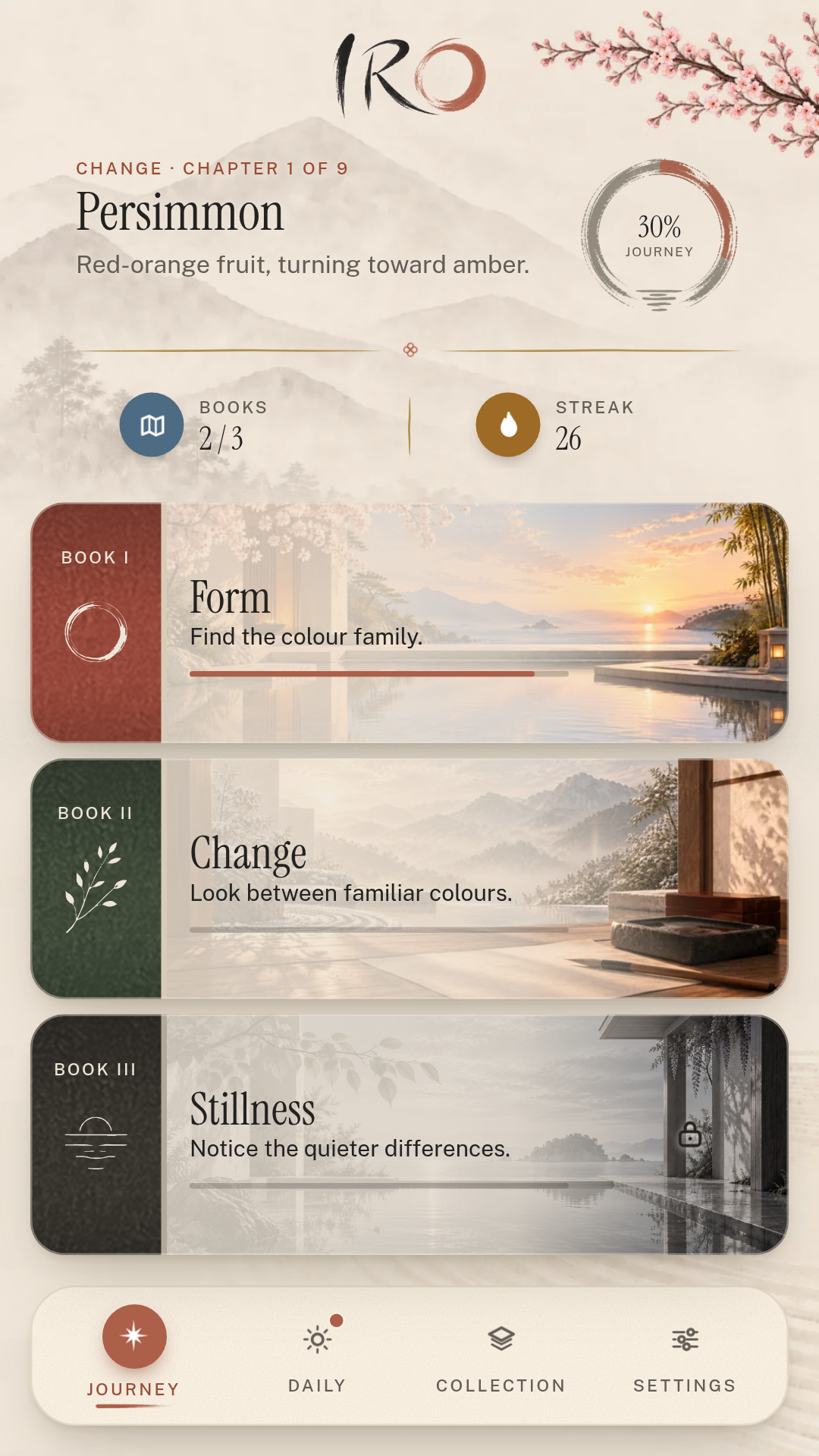
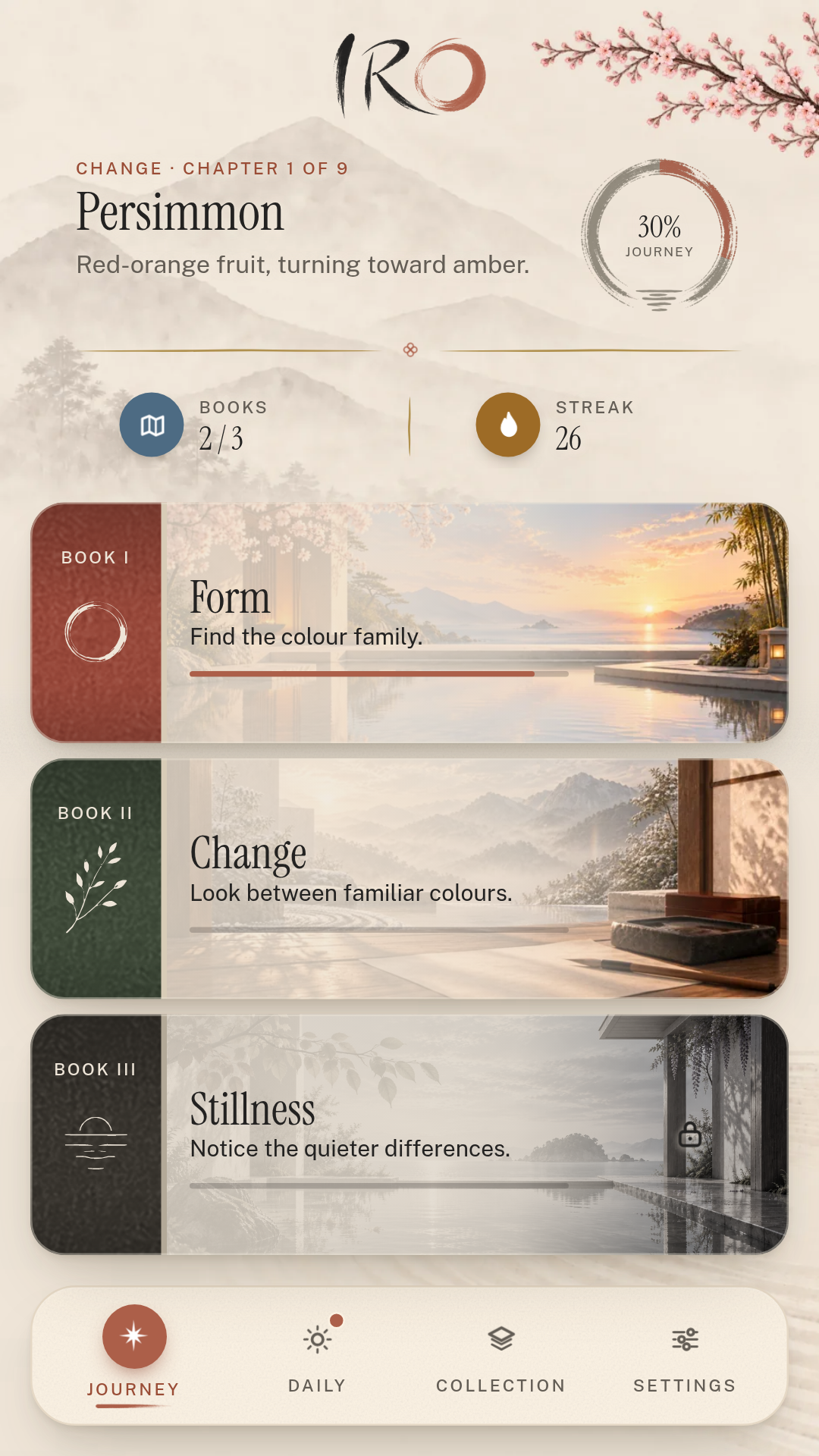
The journey
Three books of nine chapters each, and the one you're in at the top.
PNG, 2.2 MB
-
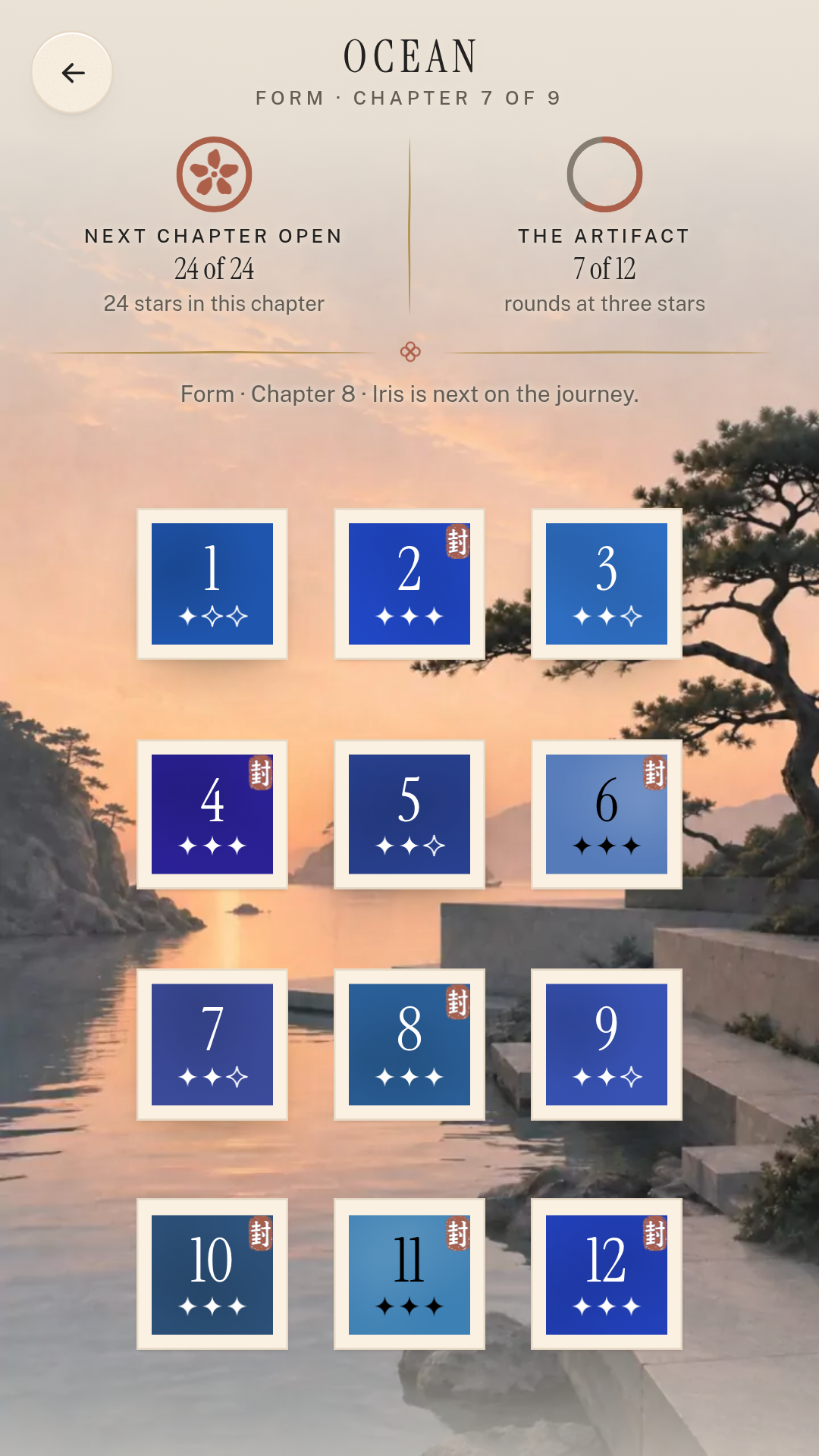
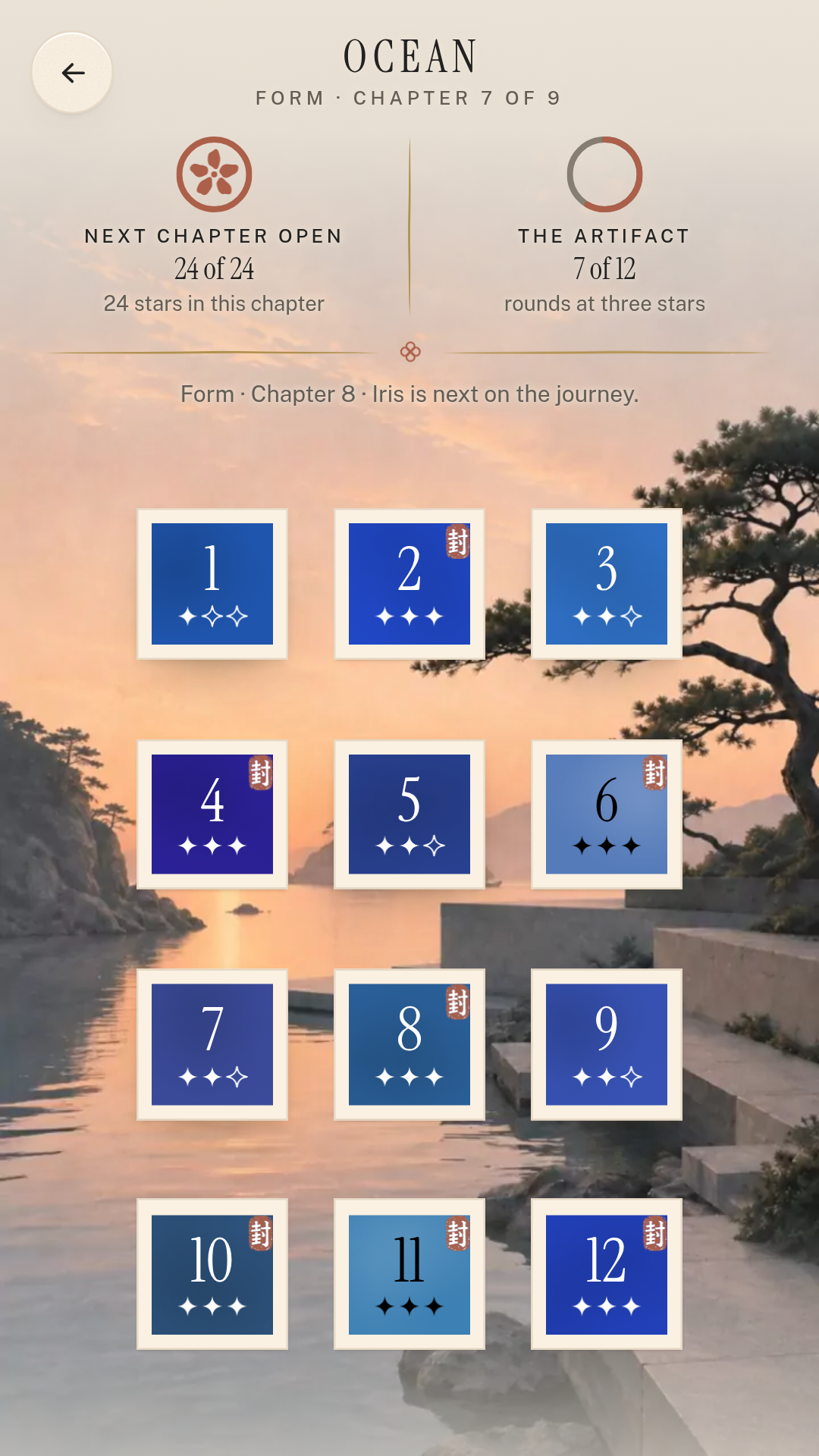
A chapter
A chapter is twelve rounds. Each tile is one round's colour and the stars you took from it.
PNG, 1.9 MB
-
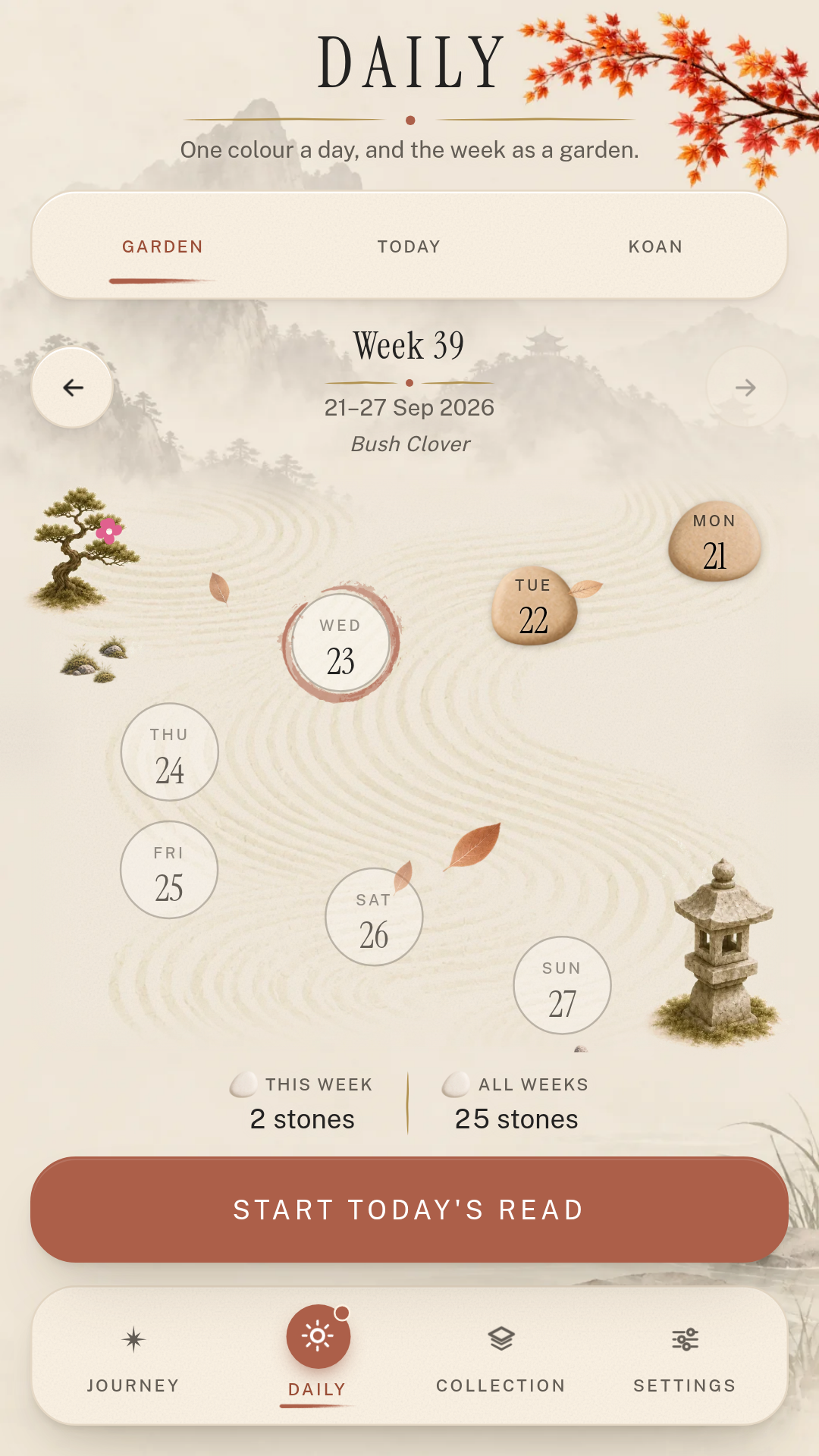
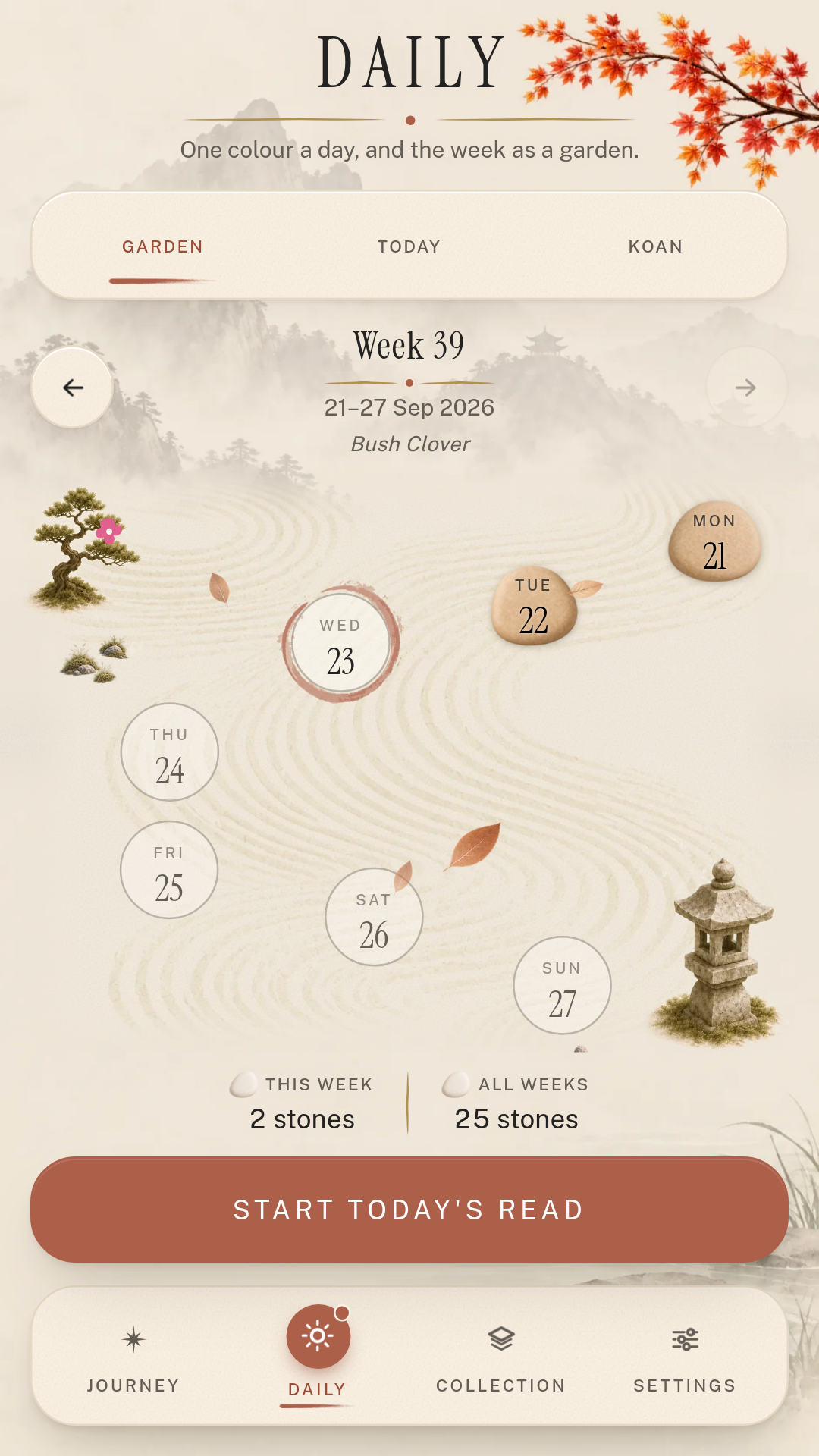
The daily garden
One colour a day, and the week as a garden.
PNG, 1.8 MB
-
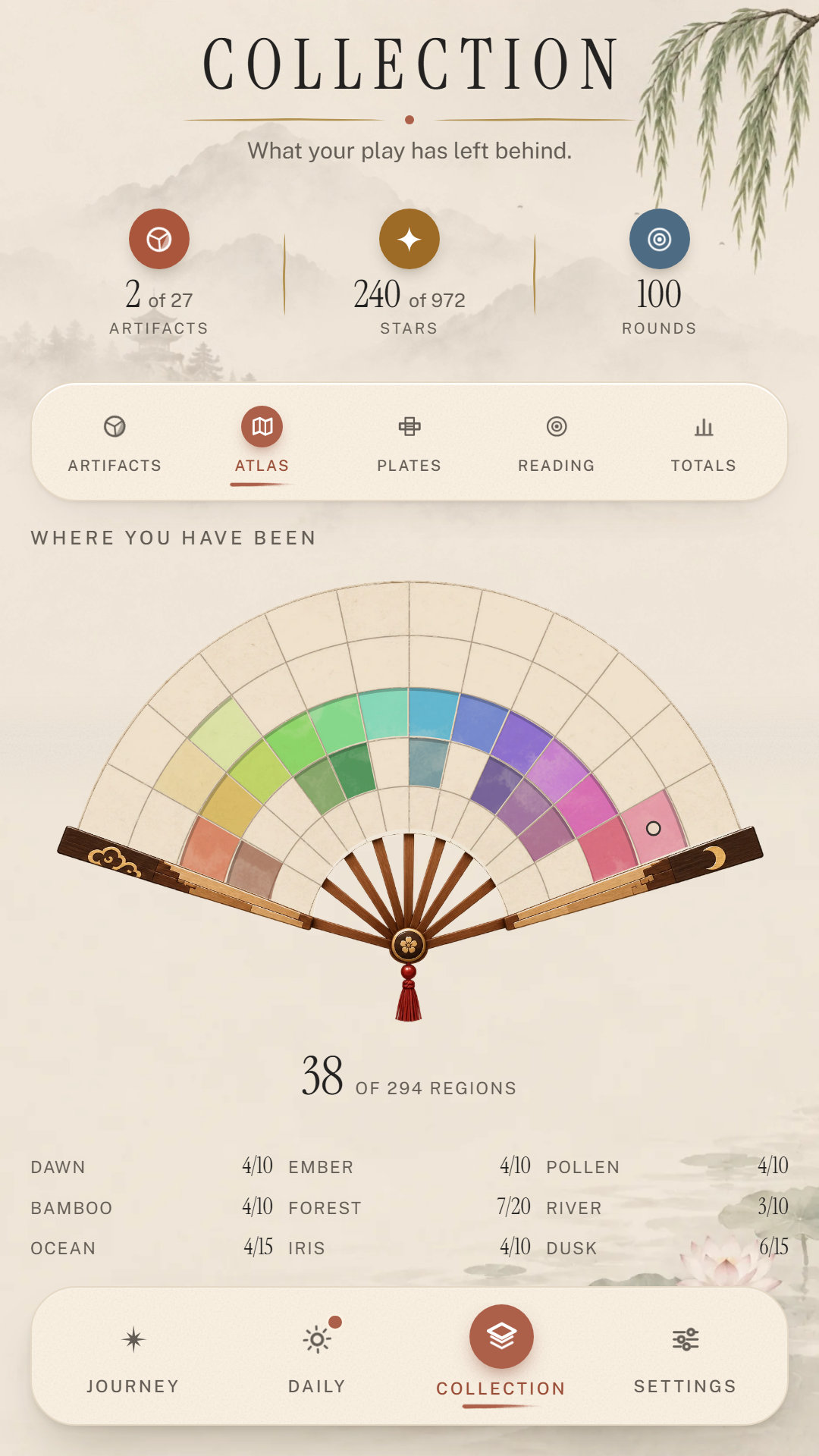
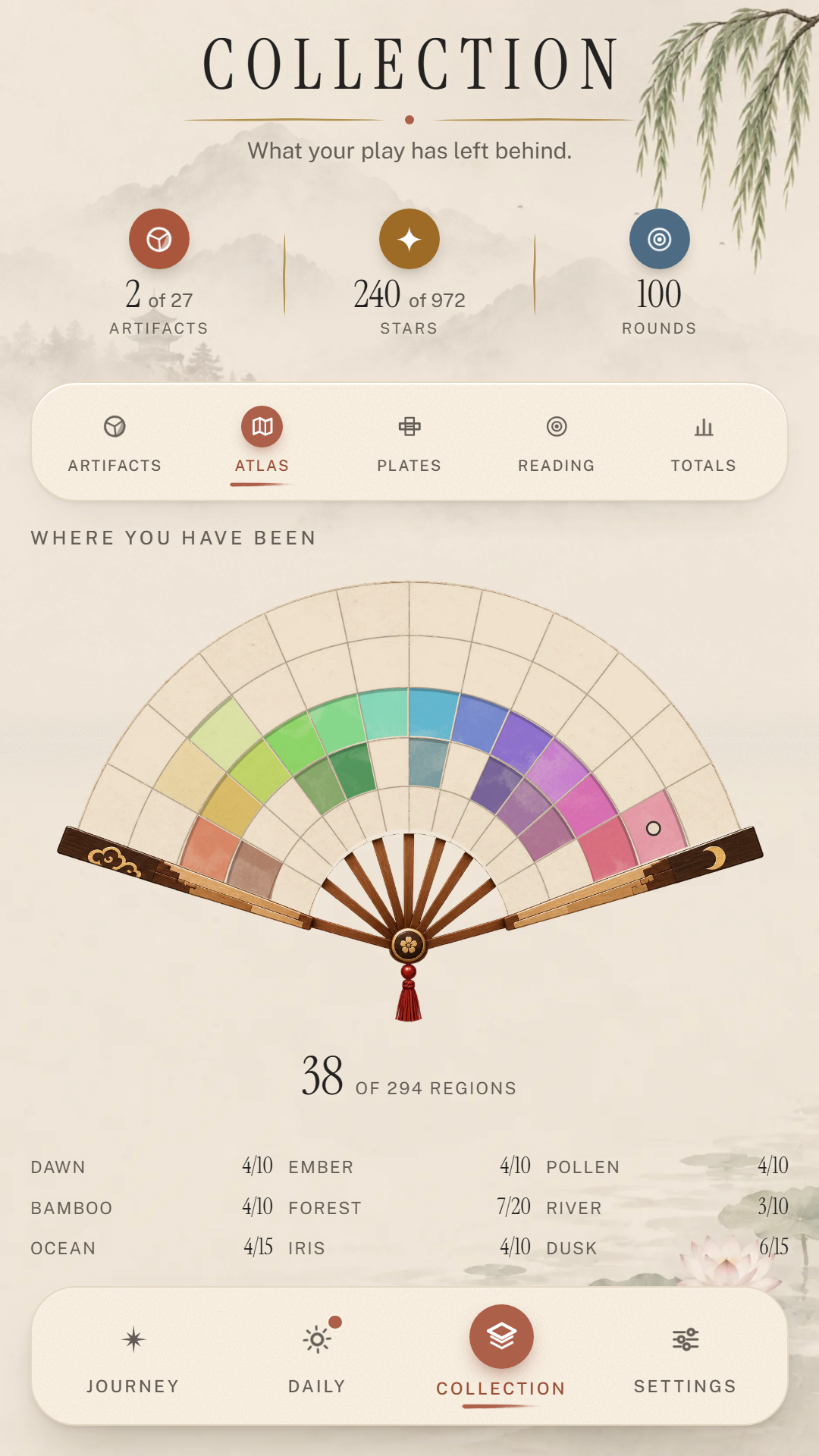
The atlas
The atlas: every part of colour space you've read, coloured in on a folding fan.
PNG, 1.3 MB
Key art and logos
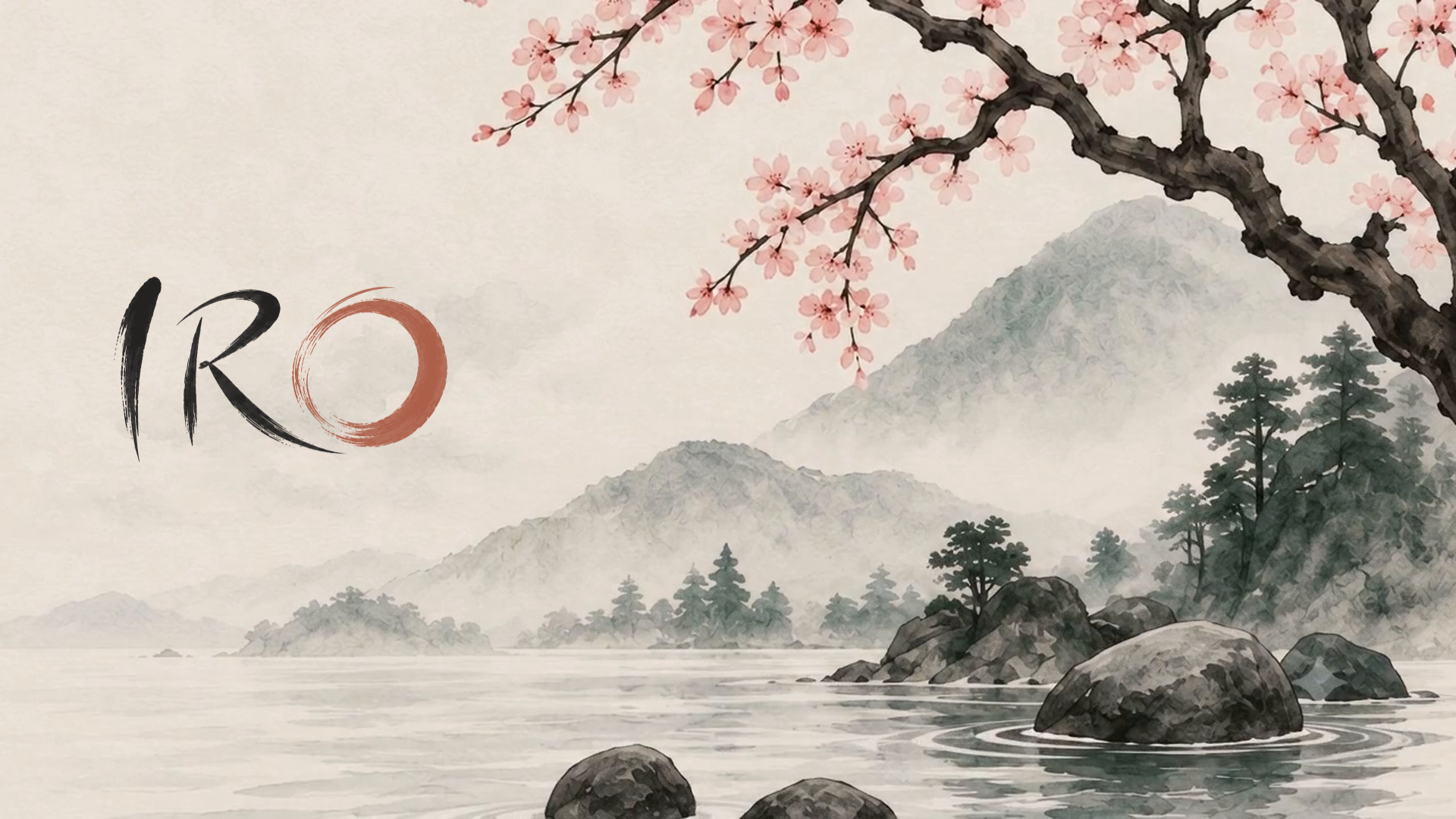
- Key art with the wordmark, landscape, 1920 × 1080 PNG, 1.9 MB
- Key art with the wordmark, portrait, 1080 × 1920 PNG, 1.9 MB
- Key art without words, landscape, 1920 × 1080 PNG, 1.9 MB
- Key art without words, portrait, 1080 × 1920 PNG, 1.9 MB
- Wordmark for light grounds, 1084 × 693, transparent PNG, 145 KB
- Wordmark for dark grounds, 1084 × 693, transparent PNG, 145 KB
- Avatar, 1024 × 1024 PNG, 68 KB
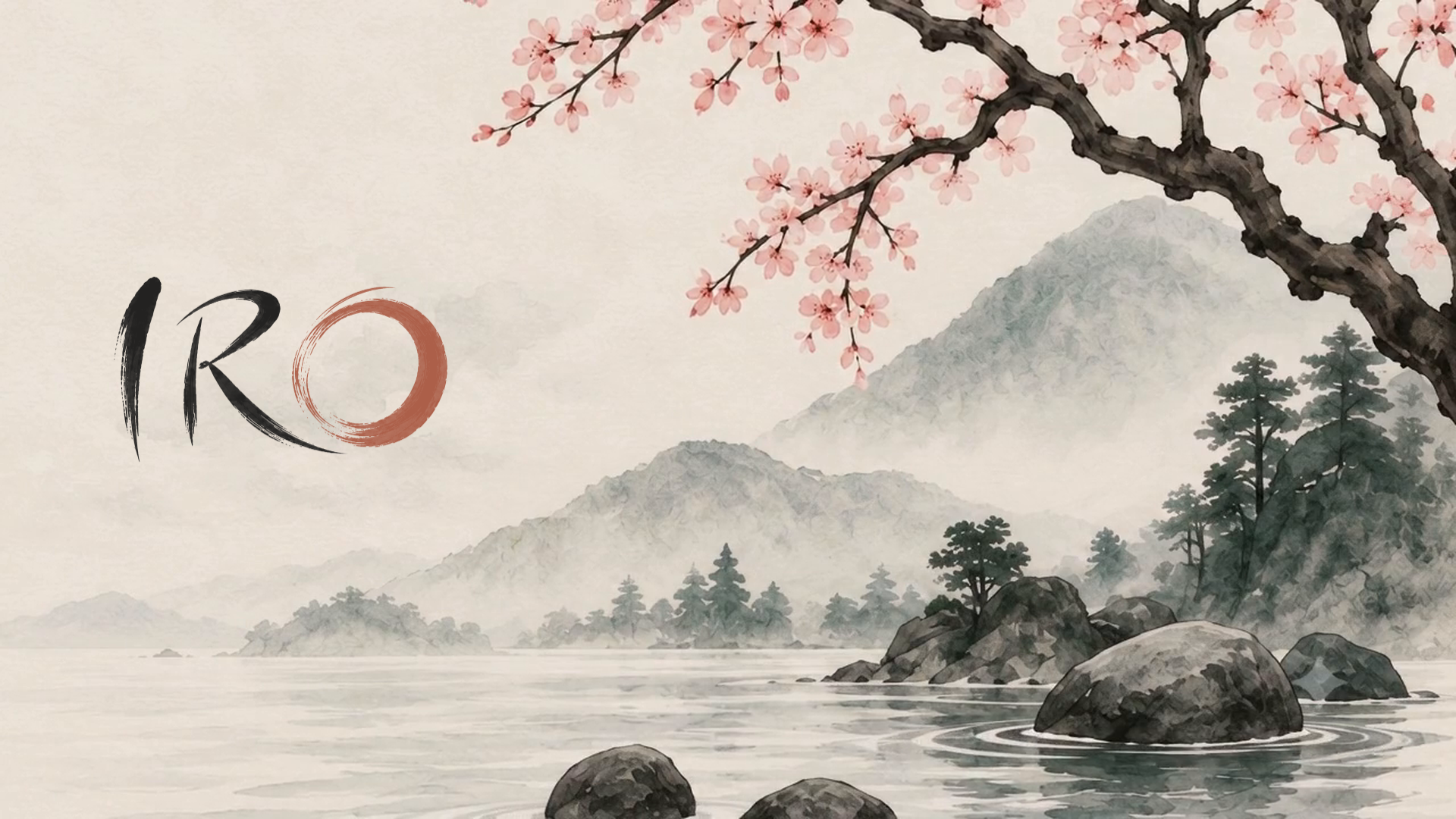
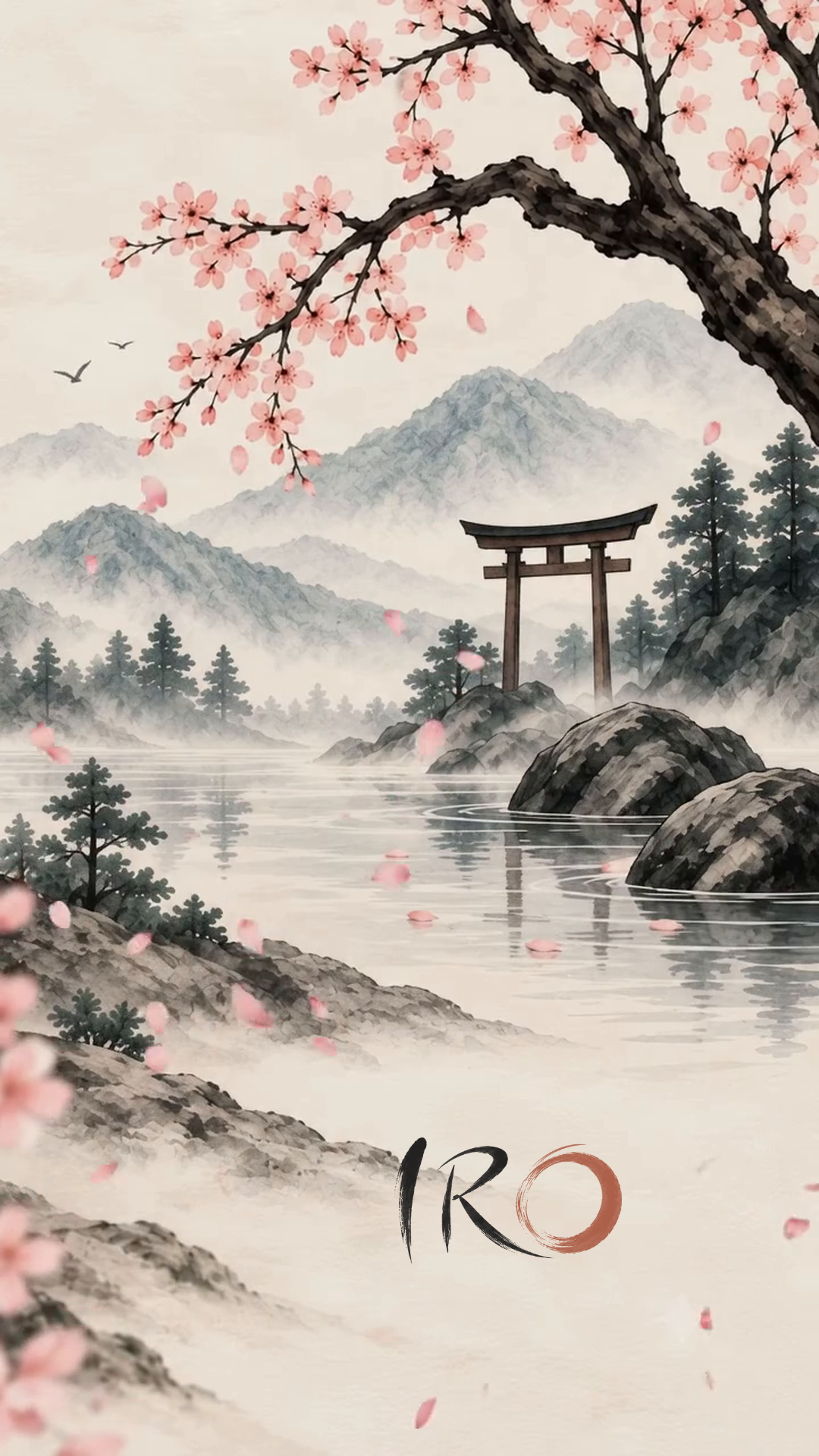
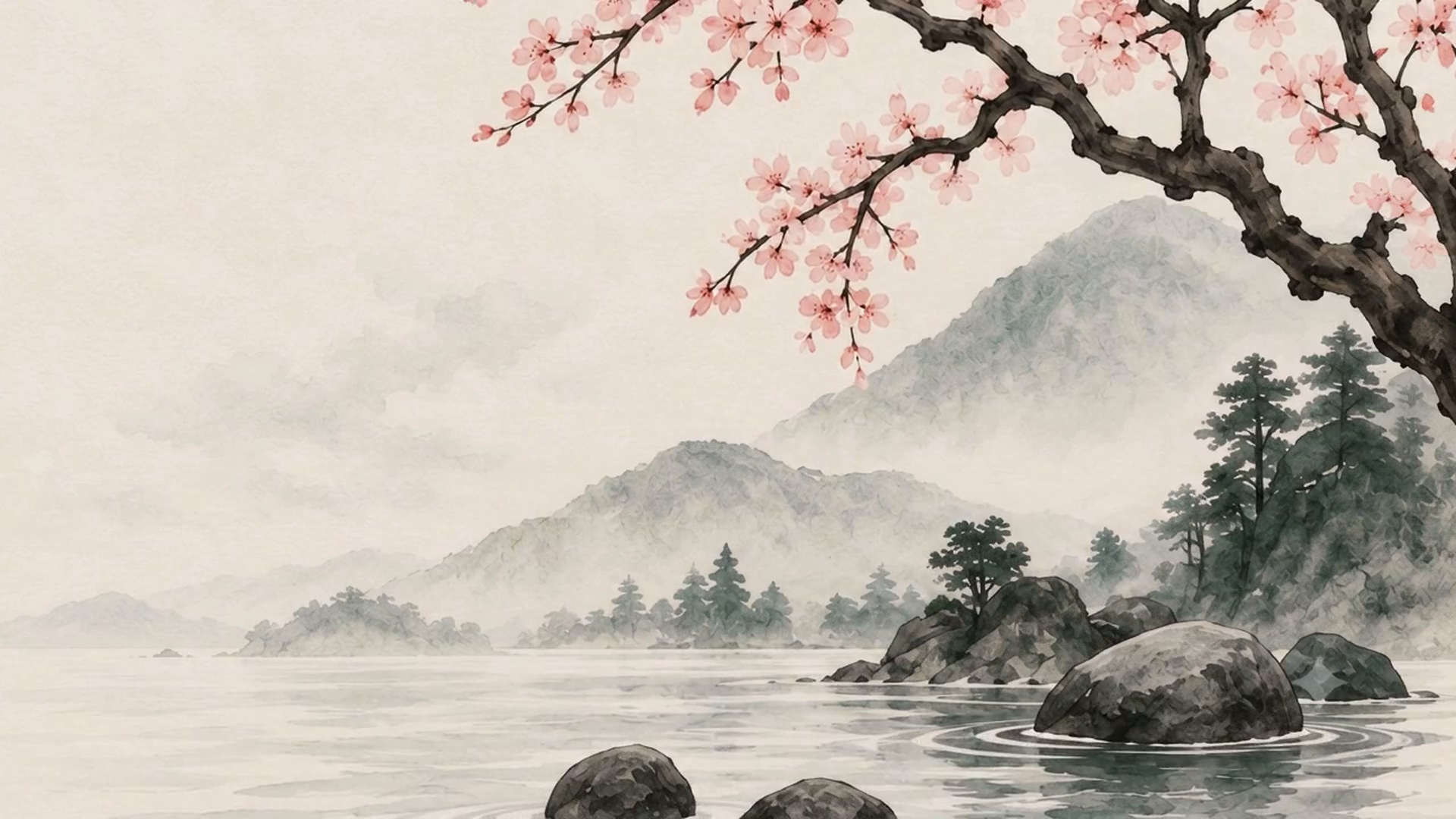
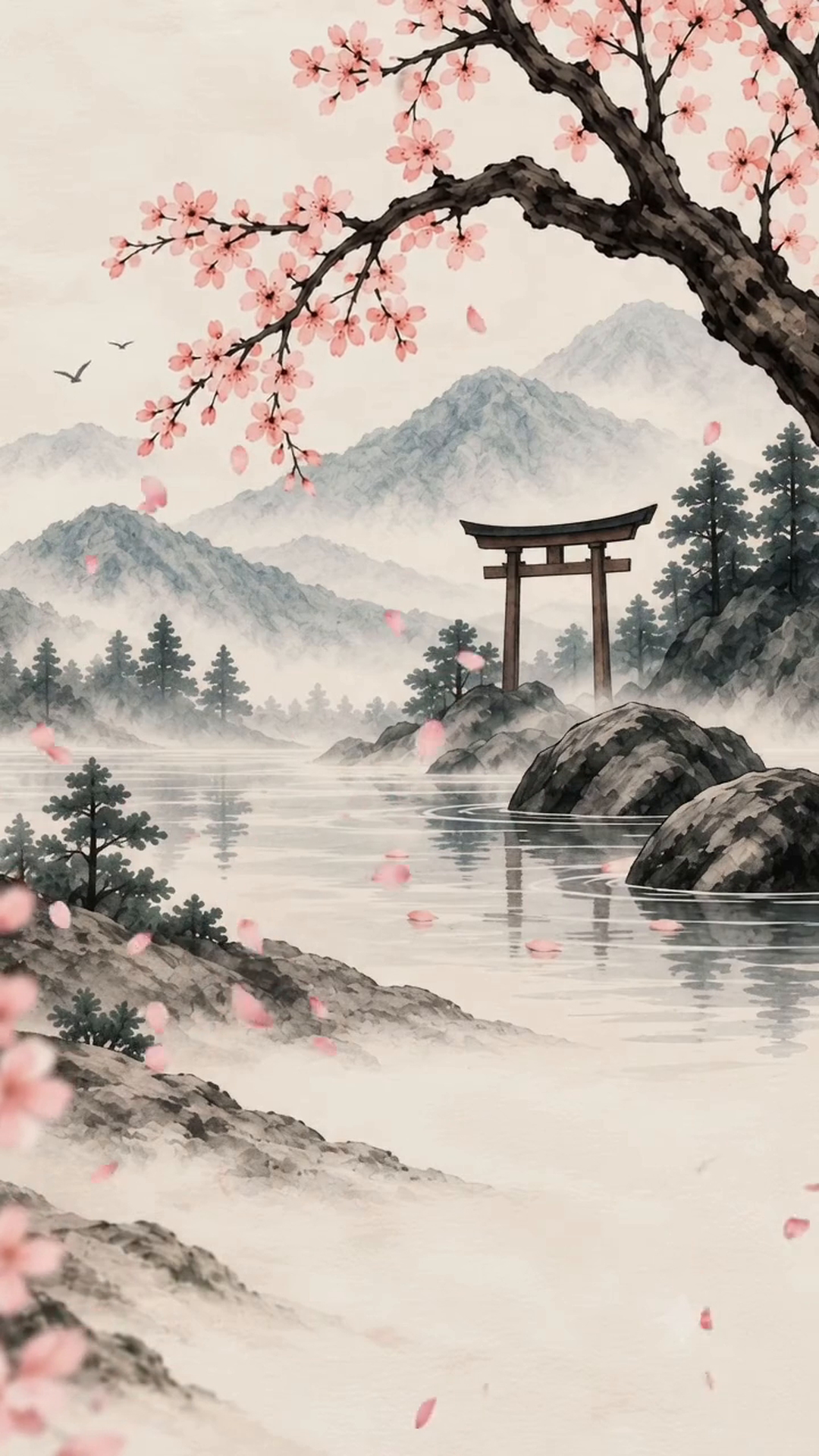
Use the light-ground wordmark on light grounds and the dark-ground one on dark grounds, at least 96 px wide. The wordmark is a brush painting, so there is no vector version: please don't set IRO in a font, recolour it, outline it, stretch it, rotate it or crop it.
The developer
Tomaž Drnovšek is a UI/UX and digital product designer based in Ljubljana, Slovenia, and the developer of Iro. The colour challenge comes from his daily job: he wanted to make a game out of the basic concepts he uses at work. It plays offline and without interruptions because he wanted to keep it simple, and the design problem he cared about was making the interface look good and work well. He made all of the game with the help of AI.
Questions
What does the player do?
A colour appears, and you name it in three numbers: its hue, its saturation and its lightness. Each guess is scored out of 100 by how close it looks to the target. After every guess the game tells you, in words, which way each of the three numbers has to move and roughly how far. In the first Book you get three guesses a round, and the round's score is your top-scoring guess, not your last. There's no timer, no lives and no fail state.
Do I need to know colour theory?
No. The first time you open Iro, six short opening rounds come before everything else. Each gives you the saturation and lightness and asks only for the hue, once round the colour circle. There's no score, and you can skip them in one press.
Does it need the internet or an account?
No. There's no account, no sign-in and no cloud sync, and the game has no tracking, analytics or telemetry. The Android app can't use the internet at all: the only permission it asks for is vibration. This website is separate. It runs Vercel Analytics and Speed Insights, and the privacy policy covers the game and the website each in its own terms.
Can I play it in a browser?
Iro is planned for iOS and Android. To try the idea first, the home page has one sample round, and it scores and answers the way the game does.
What about colour-vision differences?
The interface never says anything with hue alone: every state carries a glyph, a star count or a word as well. The core task is colour discrimination, and Iro doesn't pretend otherwise, so there's no whole-screen colour-blindness filter. There's a paper theme and a shadow theme, a high-contrast mode, and it follows the device's reduced-motion setting.
Is it on iOS?
Not yet. Iro is planned for iOS, with no price set.
Credits and use
The screenshots and videos here may be reproduced for editorial coverage and reviews of Iro, including articles and videos. Please show the game accurately and credit them Iro, Tomaž Drnovšek. Other uses need permission. The game's music and sound may be used in coverage too. Coverage does not need to be positive.
Iro is made by Tomaž Drnovšek, Ljubljana, Slovenia. Artwork was created with generative image tools and directed, selected and cut by Tomaž Drnovšek. All rights to the game's artwork, music and sound effects are held by Tomaž Drnovšek. Fonts: Instrument Serif and Public Sans, both under the SIL Open Font License.
Last updated: 10 October 2026